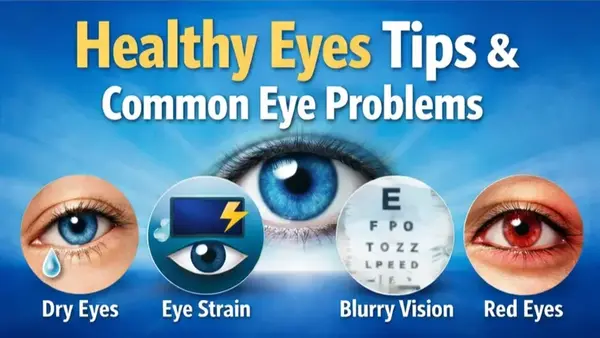
Introduction: Healthy Eyes Tips & Common Eye Problems
Taking care of our vision is essential because healthy eyes directly affect quality of life, productivity, and comfort. In today’s world, most people spend hours on digital devices, face environmental pollution, and deal with busy lifestyles — all of which contribute to common eye problems.
If you are searching for healthy eyes tips or ways to solve issues like dry eyes, eye strain, red eyes, and blurry vision, this article will guide you with clear explanations and practical solutions. You’ll learn how to protect your vision and support long‑term eye health with simple daily practices.“Following these Healthy Eyes Tips & Common Eye Problems solutions can protect your eyes from long-term damage.”
Dry Eyes: Causes, Symptoms & Effective Dry Eyes Solution
What Causes Dry Eyes?
When dealing with dry eyes, following Healthy Eyes Tips & Common Eye Problems can help reduce irritation and maintain healthy vision.
Dry eyes are one of the most common complaints in eye care. They occur when the eyes don’t produce enough tears or the tears evaporate too quickly. Major causes include:
- Long hours staring at phones, computers, or tablets
- Air conditioning or dry indoor air
- Not blinking enough during screen use
- Aging and hormonal changes
Signs of Dry Eyes
People with dry eyes often experience:
- Burning or gritty feeling in the eyes
- Redness and discomfort
- Excessive watering followed by dryness
Dry Eyes Solution That Works
Here are reliable dry eyes solutions you can start today:
- Practice the 20‑20‑20 rule — every 20 minutes, look at something 20 feet away for 20 seconds
- Use lubricating eye drops (artificial tears) as needed
- Stay hydrated by drinking water throughout the day
- Blink frequently, especially during screen time
Digital Eye Strain: How to Reduce Screen‑Related Discomfort
What Is Digital Eye Strain?
If you experience screen-related discomfort, following simple Healthy Eyes Tips & Common Eye Problems can help reduce headaches, tired eyes, and blurry vision.
Digital eye strain (also called computer vision syndrome) affects people who spend long hours on phones, laptops, or TVs. Symptoms often include:
- Headaches after screen use
- Tired or sore eyes
- Blurry or double vision
- Neck and shoulder discomfort
Why Eye Strain Happens
Eye strain often happens because:
- You focus too long without breaks
- Screens have glare or bright light
- Poor posture or poor lighting conditions
Best Eye Strain Solutions
Use these eye care tips to relieve strain:
- Adjust screen brightness and contrast
- Place screens at eye level and at a comfortable distance
- Use anti‑glare screen protectors
- Take frequent breaks — rest your eyes every 30–40 minutes
Blurry Vision: Causes & Helpful Blurry Vision Remedies
Common Causes of Blurry Vision
Blurry vision can result from many sources, including:
- Uncorrected refractive errors like nearsightedness or farsightedness
- Astigmatism
- Prolonged eye fatigue
- Dry eyes or allergy irritation
Symptoms You Should Watch For
Recognize blurry vision if you notice:
- Difficulty reading or seeing distant objects
- Frequent squinting
- Headaches after visual tasks
Effective Blurry Vision Help
Here are steps to manage blurry vision:
- Schedule regular eye exams
- Wear properly prescribed glasses or lenses
- Practice eye focusing exercises
- Reduce screen time and take eye breaks
Red Eyes & Irritation: Causes and How to Treat Them
Why Eyes Become Red
Red eyes and irritation are common forms of eye discomfort and may be triggered by:
- Allergies (dust pollen, pet dander, etc.)
- Eye infections (bacterial or viral)
- Dryness or environmental irritants
- Excessive rubbing of eyes
Common Symptoms
You may notice:
- Red or bloodshot eyes
- Itchiness or burning sensation
- Watery or sticky discharge
Safe Red Eyes Treatment Options
Follow these red eyes treatment suggestions:
- Wash hands before touching your face or eyes
- Avoid eye rubbing
- Use allergy‑friendly eye drops
- Seek medical help if symptoms worsen or persist
Daily Eye Care Tips for Maintaining Healthy Eyes
Keeping your eyes healthy isn’t just about fixing problems after they start — it’s about prevention and daily care. Try these practical habits:
Eat Foods That Support Vision
Foods rich in vitamins A, C, and omega‑3 help strengthen eye health:
- Carrots and sweet potatoes
- Leafy greens like spinach
- Fish like salmon and tuna
- Nuts and seeds
Protect Your Eyes from Harmful Light
- Wear sunglasses that block UV rays
- Use blue light filters on screens
- Keep ambient lighting balanced (not too bright, not too dim)
Schedule Regular Eye Exams
Even if you don’t have major symptoms, regular eye exams help catch issues early. Experts recommend eye checkups at least once every year or as advised.
Healthy Lifestyle Habits for Eyes
To protect your vision:
- Avoid smoking and manage overall health
- Stay hydrated
- Get enough sleep every night
- Exercise regularly for better blood circulation
Frequently Asked Questions About Eye Health
What Are the Most Common Eye Problems?
The most common issues include:
- Dry eyes
- Eye strain from screens
- Blurry vision
- Red eyes and irritation
Can Stress Cause Eye Problems?
Yes, stress and lack of sleep can contribute to eye strain, dry eyes, and blurry vision.
How Can I Improve My Vision Naturally?
Practice good habits like healthy diet, eye breaks, proper lighting, and regular eye check‑ups.
Conclusion: Healthy Eyes Tips & Common Eye Problems
Taking care of your eyes should be a priority because healthy vision supports everyday life — from reading and working to driving and enjoying leisure activities. By following Healthy Eyes Tips & Common Eye Problems, such as reducing screen strain, staying hydrated, eating a balanced diet, and attending routine eye exams, you can minimize common eye issues and maintain clear, comfortable vision.
Remember, prevention is often better than treatment. Start implementing these Healthy Eyes Tips & Common Eye Problems today to protect your eye health and enjoy better vision for years to come.